BlogDetails
Chest Pain vs Acidity
Chest Pain vs Acidity
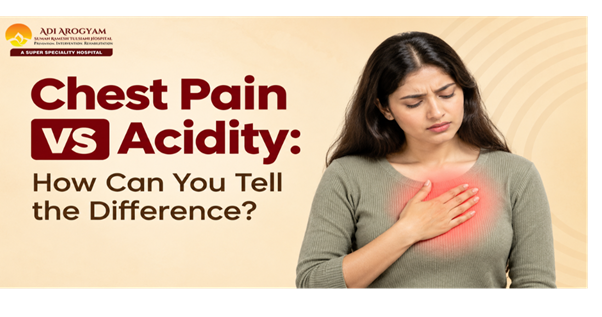
11/11/2026Have you ever felt a burning sensation in your chest after dinner and wondered if it was acidity or something more serious? You might blame the spicy paneer you ate, take an antacid and go to sleep, assuming the discomfort will pass. But what if the pain is coming from your heart instead? Many people struggle to tell the difference between chest pain vs acidity, and it is understandable. The food pipe and the heart are located close to each other, so discomfort from either can feel similar. Spicy Indian food, heavy meals and late dinners can make it even harder to identify the real cause. Knowing the difference can help you recognise when chest pain needs immediate medical attention.
How Does Acidity Pain Feel Compared to Heart Pain?
Start with the feel of it. Acidity burns. You get it behind the breastbone, sometimes high up in the belly. A sour taste, burping or a bloated stomach often come along with it. Heart pain is a different thing. People call it a heavy weight, a tight band or a hard squeeze on the chest. It usually sits in the middle or on the left. From there it can move to the left arm, the jaw, the neck or the back. If you want to know the difference between chest pain and acidity, look at the spot, the feel and the time it lasts.
What Sets Off Acidity Pain?
Food is the usual cause. Think of oily samosas, hot curries, strong chai on an empty stomach or a heavy meal at midnight. Skipping lunch does it too. So does lying down right after you eat. Stress and smoking make it worse. Most chest pain due to acidity starts after a meal or when you bend over. It gets better if you sit up straight, drink some water or take an antacid. But here is the catch. Feeling better after an antacid does not always mean it was gas. Heart pain can also come and go by itself, so keep watching for other signs.
What Are the Warning Signs of Heart Pain?
Heart pain tends to follow effort. It may begin when you climb stairs, run to catch a train or get worked up in an argument. The symptoms of cardiac chest pain often include pressure in the chest, a cold sweat, trouble breathing, feeling sick and dizzy. The pain lasts for more than a few minutes. Food has nothing to do with it, and antacids do not touch it. Risk is higher for anyone over 40, people with diabetes, high blood pressure or high cholesterol, smokers, and those with a family history of heart disease. In India, heart trouble often comes early, so do not wait.
Can a Heart Attack Feel Like Acidity?
Sadly, yes. Some acidity and heart attack symptoms look alike, such as burning in the upper belly, nausea and burping. Women, older people and those with diabetes may not get the classic crushing pain. They may only feel very tired, or get a backache, a sore jaw or a cold sweat. Some heart attacks give no pain at all. So here is a simple rule. If the burning is new, stronger than usual or does not go with an antacid, take it as a heart problem first. Hearing ‘it was only gas’ is a good day. Missing a heart attack is not.
When Should You See a Cardiologist?
Some situations cannot wait. Head to the emergency room straight away if the pain lasts more than a few minutes, spreads to your arm or jaw, or comes with sweating or breathlessness. Do not drive yourself. Ask a family member or call an ambulance. For milder cases, many people ask when to see a cardiologist for chest pain that comes and goes. Book a visit if it shows up when you walk, if antacids have stopped working, or if you have any risk factor. The doctor will ask about your history, check your pulse and blood pressure, and may order an ECG, blood tests or an echo.
How We Help You at Adi Arogyam
Our hospital in Kannamwar Nagar, Vikhroli East, has an emergency team working round the clock. Cardiologists, physicians and gastroenterologists practise under one roof at Adi Arogyam, so one visit can check both the heart and the stomach. If you are looking for chest pain treatment in Vikhroli, you can walk in at any hour. We treat every chest pain as serious until tests show otherwise.
Burning after a meal is often acidity. Pressure, sweating or pain that spreads points to the heart. If you are not sure, get checked. Learning chest pain vs acidity helps, but a doctor’s check is better.
Call 8850626106 for emergencies, or book a cardiology appointment on 022-25786100.