
BlogDetails
Angiography vs Angioplasty: 5 Key Differences You Must Know
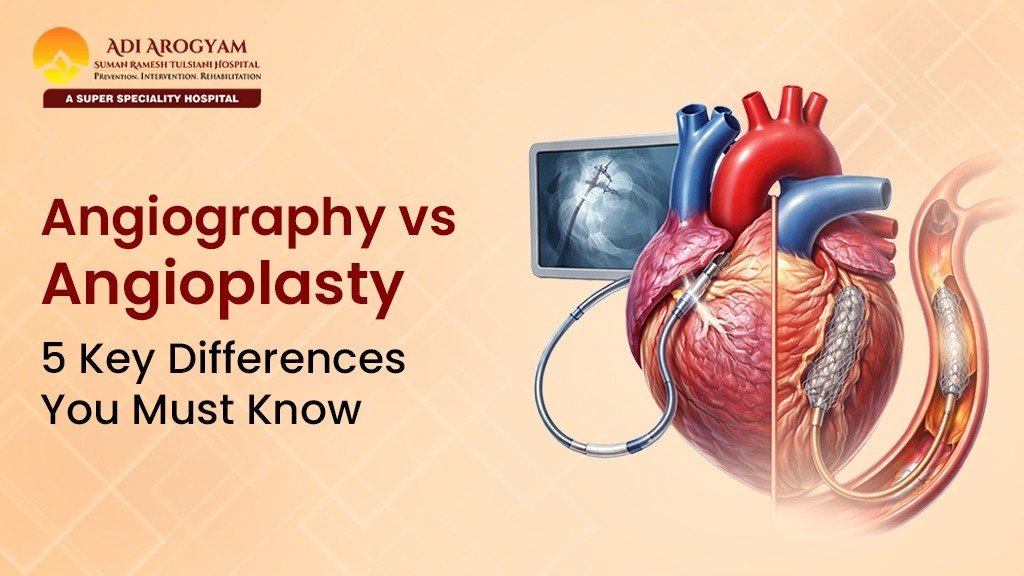
Angiography vs Angioplasty: 5 Key Differences
01/05/2026Purpose of Angiography and Angioplasty Procedures
Angiography works as a test. It shows doctors the inside of the arteries with the help of a safe dye and X-ray images. The goal is to find where blood flow slows or stops. No change happens to the vessel itself. Angioplasty goes further. It uses the same small tube but adds a tiny balloon that inflates to push the blockage aside. A small mesh tube called a stent often stays in place to keep the artery open. The first procedure finds the issue. The second fixes it. Our experts at Adi Arogyam Superspeciality Hospital choose based on test results and patient symptoms. These clear split stops confusion and guide the right care.
How Doctors Perform Each Procedure
Both use a thin tube placed in the wrist or groin. For angiography, the tube carries dye that lights up the arteries on screen. The doctor watches live images and notes every narrow spot. The whole check takes under an hour.
Angioplasty is like the Angio path, with one addition: a balloon. The doctor carefully steers this balloon to the blockage itself and blows it up briefly. Immediately, blood can flow much better.
Many times, the team completes both steps in one visit. We prepare patients with simple instructions and answer questions before they start. The hospital in Vikhroli East uses modern rooms that keep the process smooth and calm.
When Doctors Recommend Angiography or Angioplasty
Angiography is used when symptoms suggest a problem, but the exact cause stays unclear. Chest pain during activity or after meals often leads to this test. Angioplasty becomes the choice once images show a blockage that limits daily life or raises the risk of a heart attack. Doctors look at age, other health conditions and how severe the narrowing looks. They never rush the call. Our team at Adi Arogyam reviews each scan together. They explain why one step is enough or why both make sense. Early talks help patients understand the timeline and feel part of the plan. Waiting too long can raise risks, while acting at the right moment brings quick relief.
Risks and Safety Measures in Place
Every procedure carries small risks, but both stay far safer than open-heart surgery. With angiography, you might get a little bit of bruising where the tube went in or a brief response to the dye. Angioplasty does have a slightly higher risk; the artery could become narrow once more at some point in the future. But our doctors are meticulous with safety procedures, and they will keep a very careful eye on you both during and after your appointment.
They check blood pressure and heart rhythm without pause. We use the latest equipment to minimize any discomfort. Clear instructions before the day and medicine plans after reducing problems further. Patients leave with a full list of signs to watch and numbers to call if anything changes.
Recovery Time and Follow-Up Care
Recovery after angiography is quick. Most people walk within hours and return to light tasks the next day. Angioplasty needs a bit more rest because of the stent. Patients take medicine to stop clots and attend short check-ups.
Our team at Adi Arogyam Superspeciality Hospital sets personal plans that fit daily routines. They schedule follow-up scans only when needed and teach simple ways to protect heart health at home. Diet changes, gentle walks and medicine reminders help results last. We track progress so any new issue gets caught early. The focus stays on steady improvement and fewer hospital returns.
Adi Arogyam brings expert heart care together under one roof. Our doctors combine years of experience with modern tools to support each patient fully. Clear answers and steady support stay central in every case. If symptoms worry you, an early talk can prevent bigger issues later.
Book your consultation at Adi Arogyam Superspeciality Hospital today.